The art of preparing matcha
More than a drink — a 500-year-old tradition that unites art, philosophy and mindfulness in a single cup of tea.
A rich history
In the late 12th century, the Buddhist monk Eisai brought tea seeds and the knowledge of powdered green tea from China to Japan. The monks used matcha to stay awake during meditation.
Soon matcha spread to the samurai, who valued the discipline and ritual around the tea. The tea ceremony became part of the samurai's training in focus and presence. Today matcha is enjoyed by everyone, from students to athletes.
In the 16th century, the tea master Sen no Rikyū revolutionised the tea ceremony. He rejected extravagance in favour of simplicity, local craftsmanship and an aesthetic that values the imperfect.
The philosophy behind the tea
The tea ceremony was shaped by Zen Buddhism, focusing on presence, simplicity and appreciating the moment.
Wabi-Sabi
Beauty in imperfection
Wabi-sabi is an aesthetic that finds beauty in transience and imperfection. A chawan with small cracks or uneven glaze is valued more highly than a “perfect” machine-made cup — it tells a story and reminds us of the fleeting nature of life.
Ichi-go Ichi-e
One meeting, one chance
Every meeting is unique and can never be fully recreated. This principle reminds us to be fully present in the moment. When you drink matcha, this is the only time this exact combination of time, place and people will exist.
The four principles of Chadō
Sen no Rikyū defined four fundamental principles that must be present in every tea ceremony.
Harmony
Wa
Harmony between guests, hosts, nature and the tools. Everything should be in balance.
Respect
Kei
Deep respect for all things and people, regardless of status or position.
Purity
Sei
Purity of heart and mind, as well as the physical cleanliness of the tea room and the tools.
Tranquillity
Jaku
Inner calm and contentment. A deep tranquillity that comes from accepting the nature of things.
Two traditions: Usucha and Koicha
In the tea ceremony there are two ways to prepare matcha, each with its own meaning and context.
Usucha — thin tea
The most common form of matcha. Light, refreshing, and with a characteristic layer of fine foam on top. Usucha is whisked quickly in W-shaped movements.
In the ceremony: Served at chakai (informal tea gatherings) and as the conclusion of a chaji. Each guest gets their own bowl.
Water temperature matters: above 80°C more tannins are released, giving a bitter taste. 70–80°C gives the best balance between flavour and aroma.
Koicha — thick tea
The most ceremonial form. Thick as honey, intense umami, and without foam. Koicha is gently kneaded in circular movements rather than whisked.
In the ceremony: The highlight of a chaji. Traditionally one bowl is shared among several guests — a symbol of community and trust.
Important: Koicha requires matcha of the very highest quality (S grade or A grade). Plants older than 30 years give the leaves the deep umami flavour needed for the concentrated tea.
Types of tea ceremony
From informal gatherings to multi-hour ceremonies — the tea tradition has room for many contexts.
Chakai
Informal tea gatheringA simpler tea gathering that includes wagashi (Japanese sweets) and usucha (thin tea). Typically lasts 1–2 hours and is a good introduction to the tea ceremony.
Tea served: Usucha
Chaji
Formal tea ceremonyThe complete tea ceremony, including a kaiseki meal, wagashi, koicha (thick tea), and concluding with usucha. A chaji can last up to 4 hours.
Tea served: Koicha + Usucha
Traditional tools
Each tool in the tea ceremony has its own history and meaning. They are not just tools, but objects for meditation and appreciation.
Chasen
Bamboo whisk
A handmade bamboo whisk with 80–120 fine prongs. Essential for creating the characteristic foam and blending the matcha evenly without lumps.
Tip: Soak the whisk in warm water for 1–2 minutes before use to make the prongs softer and more flexible.
A chasen for koicha has fewer prongs (around 80) than those used for usucha (100+), since koicha is gently kneaded rather than whisked.
Chawan
Tea bowl
A wide, flat-bottomed ceramic bowl that gives plenty of room to whisk. The wide opening lets the matcha cool to a drinkable temperature.
Tip: Preheat the bowl with warm water to keep the matcha warm longer.
Each chawan is unique — its imperfections are valued as an expression of wabi-sabi. The bowl is turned so that its most beautiful side faces the guest.
Chashaku
Bamboo scoop
A traditional bamboo scoop for measuring matcha powder. One scoop equals about 1 gram of matcha.
Tip: 2 scoops (about 2 g) is standard for a cup of usucha.
Tea masters often carve their own chashaku and give them poetic names. A chashaku can be a cherished personal tool.
Furui
Sifter
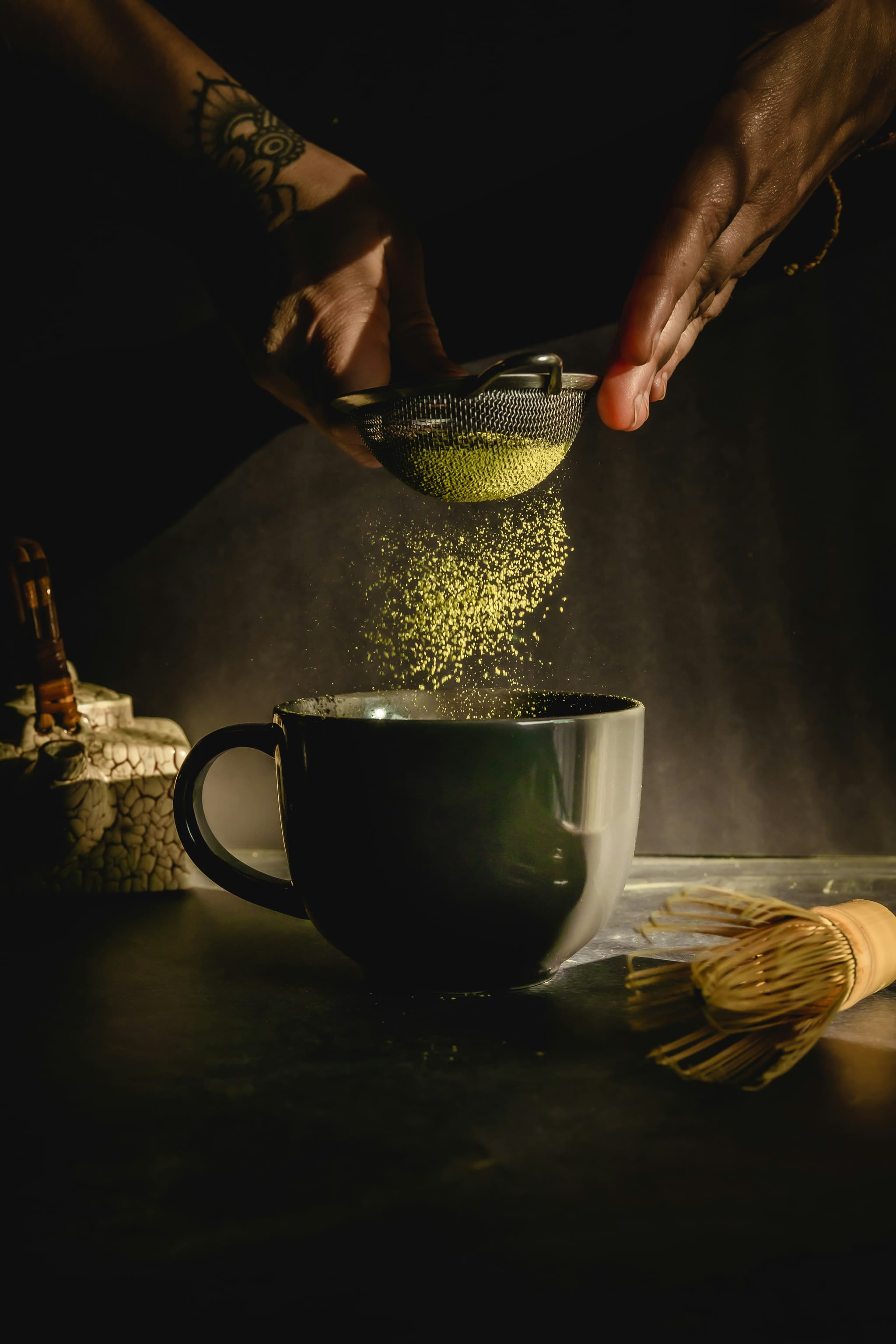
A fine sifter for removing lumps from the matcha powder before preparation. Gives a smoother and more refined tea.
Tip: Sift the matcha directly into the tea bowl for best results.
Sifting is a meditative moment in the preparation — a quiet act that prepares the mind for the ceremony.
Don't have traditional equipment? A small bowl and a milk frother can work for everyday use.
See our selection of equipmentA moment for yourself
In our hectic everyday lives, preparing matcha offers a rare moment of calm. The precise technique demands full attention — it's hard to whisk matcha while your mind wanders.
You don't need a full tea ceremony. A few minutes of mindful preparation can give you a well-deserved break from everyday life.
Storage
Proper storage is essential to preserve matcha's colour, flavour and aroma.
Unopened
Shelf life up to 24 months from the production date. Store in a cool, dry place, protected from light.
After opening
Best within 1–2 months of opening. Seal the pouch well after use and store in a cool, dry place. A refrigerator is ideal, but let the matcha reach room temperature before use to avoid condensation.
Ready to make matcha?
Now that you know the culture and philosophy, it's time to try it yourself. Find recipes for everything from traditional usucha to modern matcha drinks.